
We analyzed 26,000 Amazon product titles
Most Amazon title advice is folklore. We measured instead: nine months of daily page-one tracking across ~10,900 unique titles on our core shelves, plus a cross-section of ~15,000 deduplicated titles spanning ten categories, from protein powder to toilet paper to press-on nails. Every count here is unique titles, not observations. The headline finding: we tracked 191 title rewrites as events, and rank did not follow. Thirteen findings follow in full, including three nulls, published on purpose. Knowing what does not matter is as actionable as knowing what does.
Put the findings to work: Amazon Copywriting: The Complete Guide →
The brand-first convention, and its null
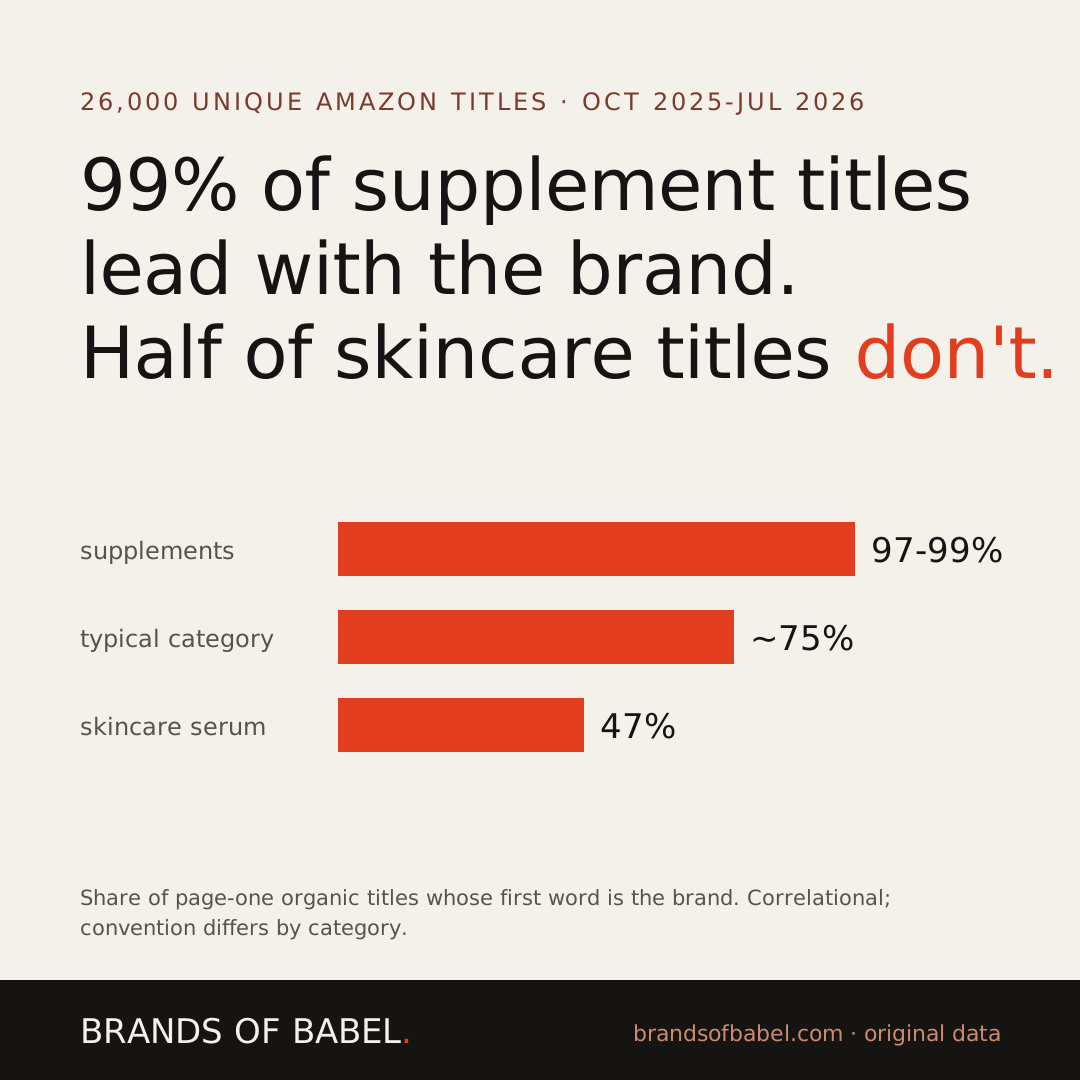
95-99% of supplement and oral-care titles open with the brand name. Only half of skincare titles do; the rest lead with the benefit or ingredient. And within every shelf, the top four positions and the bottom of the page front-load the brand at nearly identical rates (creatine: 97.9% vs 97.3%). It is a convention, not a differentiator. Match it; expect nothing from it. The cross-section adds the calibration: across ten categories, about three in four titles lead with the brand. Supplements, at 97-99%, are the extreme, not the norm. And a few shelves genuinely lead with the idea instead of the maker: skincare (47%), snacks (56%), and toys (58%) put the benefit, format, or play pattern first.
Consumables count; durables describe
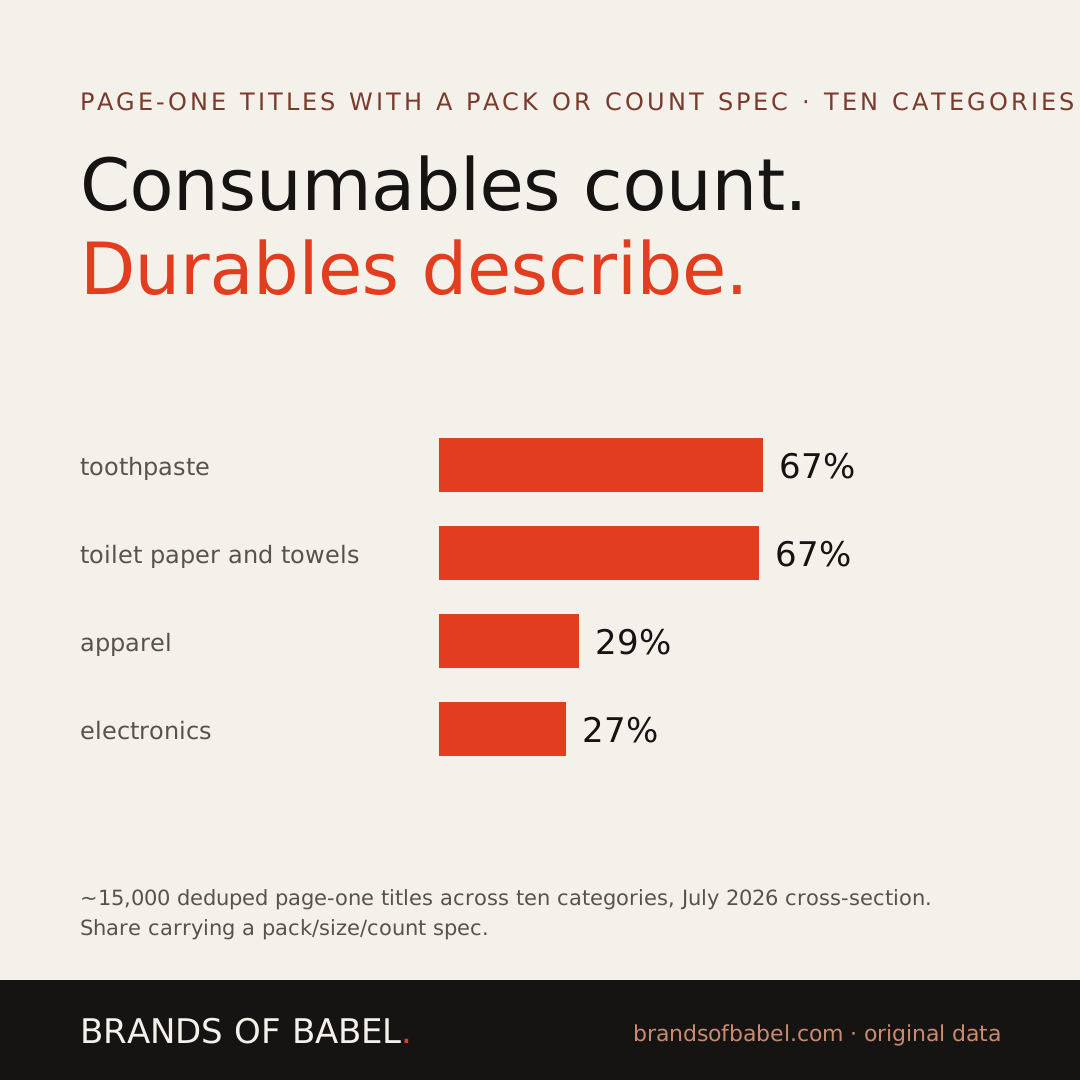
Across ten categories, one line splits page one: whether the product runs out. Sort every category by pack-and-count specs and it divides cleanly. Things you rebuy shout counts: supplements 80%+, toothpaste, snacks, and paper goods all at two-thirds, toys and pet supplies past half. Things you buy once describe attributes instead: barely a quarter of electronics, apparel, and skincare titles carry a count. It is the cleanest general law in our data.
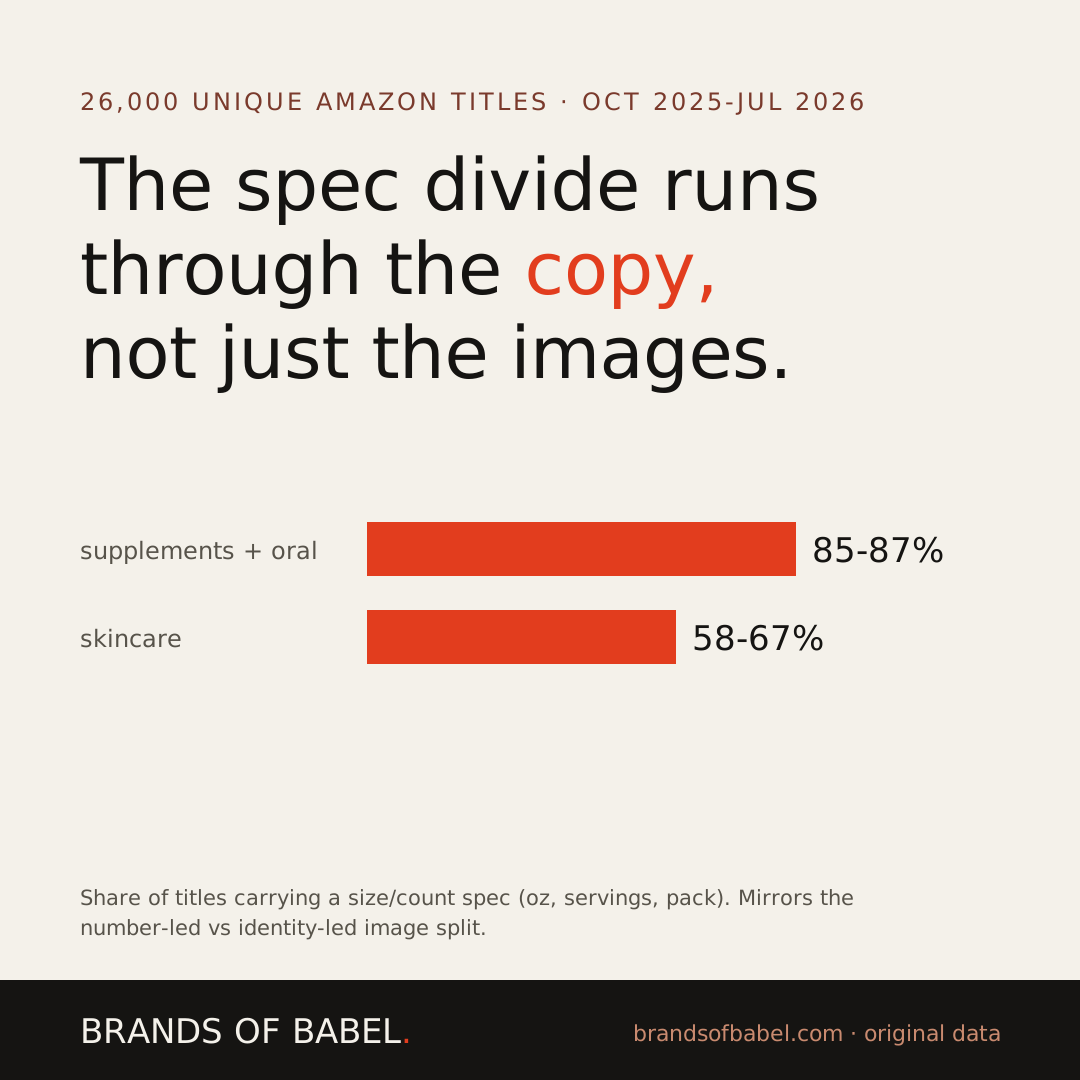
Within the core shelves the divide repeats at finer grain, though the shelves are cut differently: the cross-section above measures skincare serums specifically, the core shelf is skincare broadly. On the core shelves, 85-87% of supplement and oral-care titles spec, and skincare runs 58-67%. And in several shelves the top four positions actually use fewer specs than the bottom of the page; top skincare listings lead with name and benefit, not spec-stuffing.
A digit is not a differentiator
Digits appear in 82-100% of titles in twelve of the thirteen clusters we measured: every toilet-paper title, 97% of snack and toothpaste titles, 94% of electronics. Only apparel dips (72%), because its sizes and colors are words. Advice to "put numbers in your title" is advice to match the wallpaper. NULL, and the closest thing to a universal law of Amazon copy.
Title length is bimodal: a category convention, not a law
Categories cluster at two poles. Attribute-heavy shelves run long: toys at a median 177 characters, electronics 175, beauty tools 172, home goods 167, supplements and skincare around 160, all brushing the 200-character policy ceiling. Simple-choice shelves run half that: apparel 103 characters, toothpaste 110, snacks 113, paper goods 120. And length is independent of the spec divide: toothpaste is short and counted, electronics are long and uncounted. The keyword-stuffed 200-character title is real, but it is a category convention, not the platform norm.
And length is not a lever. Toothpaste is the only core shelf where longer clearly tracks better rank (top-4 average 156 vs 119 at the bottom of the page). Everywhere else, length barely correlates with position. Write to your category's pole, then stop.
Every shelf has a mandatory vocabulary
Words appearing in more than 40% of a shelf's titles are that shelf's required language. Peptide serum requires seven of them. Creatine requires two. And four categories require none at all: not a single word appears in even 40% of apparel, electronics, home-goods, or fitness titles. Where the product is narrow, the language is locked; where the category is broad, there is no formula to copy.
Every category writes to its own axis
No two categories share a lead vocabulary. Electronics sell features: led, portable, wireless, waterproof, usb. Home goods sell color, room, and material: black, steel, bedroom, coffee. Apparel sells gender and season: women 36%, men 15%, summer 14%. Snacks sell the multipack: pack 49%, variety 39%, individually wrapped 24%. If your copy could be pasted onto another category's shelf without looking wrong, it is not speaking your shelf's language yet.
The most templated titles on Amazon: serums, toilet paper, toothpaste
Measured as average pairwise word overlap, page one runs a 5x spread. Peptide serum (0.132), toilet paper (0.128), and toothpaste (0.127) share the templated crown: their titles are near-paraphrases of each other, locked to a single lexicon ("serum" appears in 94-97% of serum titles; "rolls" in 80% of toilet-paper titles). At the other end sit the broad categories: electronics (0.024) is roughly three times more diverse than protein powder, and apparel, home goods, and fitness join it in having no mandatory word at all.
The close-up below shows the two modes side by side. Serum titles complete a template; protein titles order from a menu of flavors, diets, and formats, none of which clears 40%. One honest caveat: convergence partly measures how narrow the product is, not how lazy the copywriters are. Peptide serum and toilet paper are essentially single products; electronics spans headphones to LED strips. The real law: the more commoditized the product, the harder page one converges on one sentence, and the more differentiation has to come from somewhere other than words.
The free-from stack rules supplements; the superlative is banned everywhere
40% of protein titles say "free" (sugar-free, gluten-free); 29% of creatine. Skincare and oral care barely use it. Meanwhile "best" appears in at most 1.1% of any shelf's titles, "premium" at most 2.1%, "new" under 1%. Amazon's policy suppresses superlatives, so brands stack compliance-safe free-from claims instead. Claim grammar is a policy artifact. And the free-from stack itself is a supplements dialect: outside supplements it barely exists in any of the ten categories we cross-checked.
The quirks are category tells
No word predicts winning
The vocabulary over-represented in top-4 titles is just the proper nouns of the incumbents who live there (iso100, monk fruit, seeq), not a transferable copy formula. NULL, and consistent with everything else in this study: copy composition is a convention you match, while rank is earned elsewhere.
Page one edits constantly
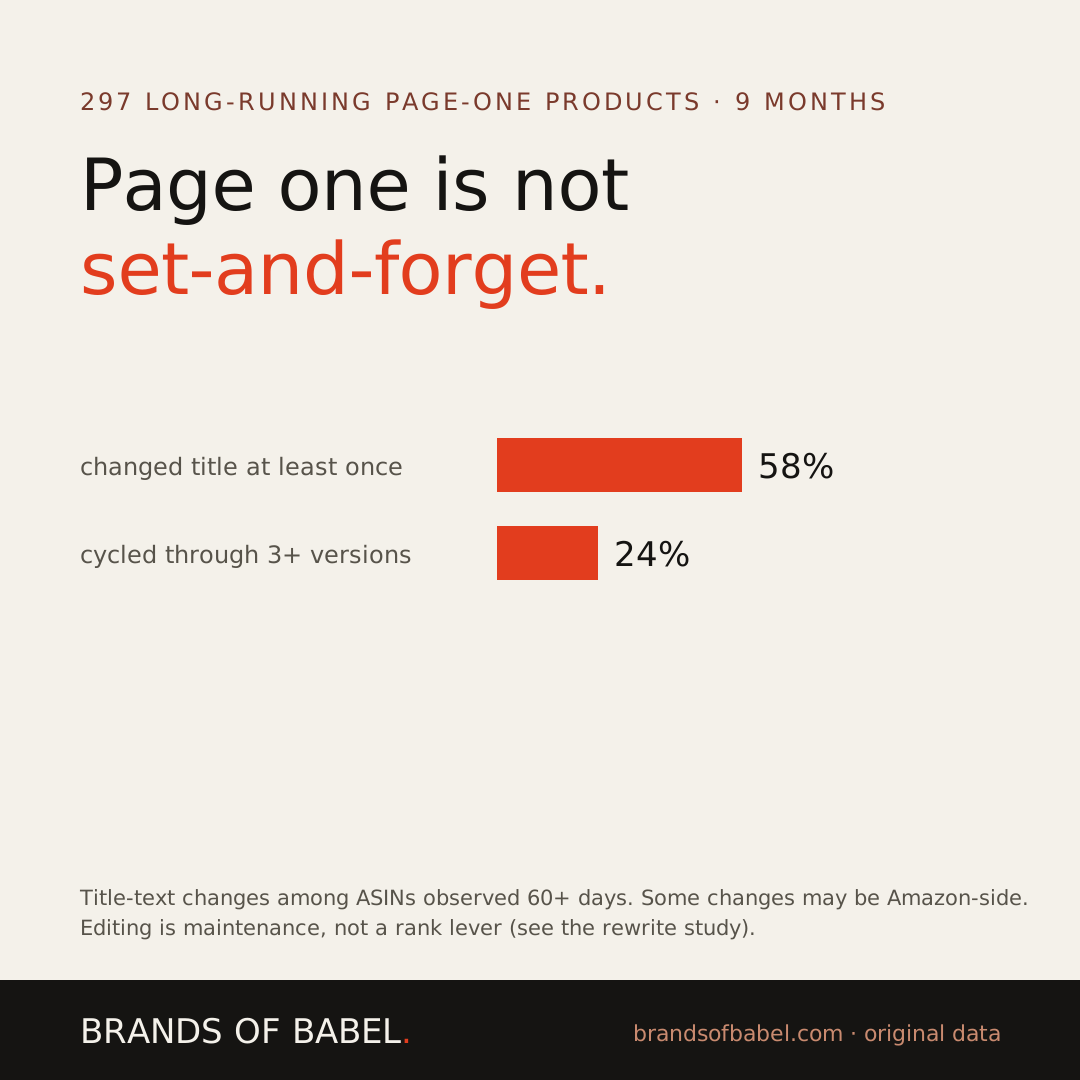
58% of long-running page-one products rewrote their title at least once in nine months; a quarter cycled through three or more versions. The most active editors are mid-page contenders at positions 5-10, where 82% edited: the products closest to the top fight hardest on copy.
Rewrites do not lift rank
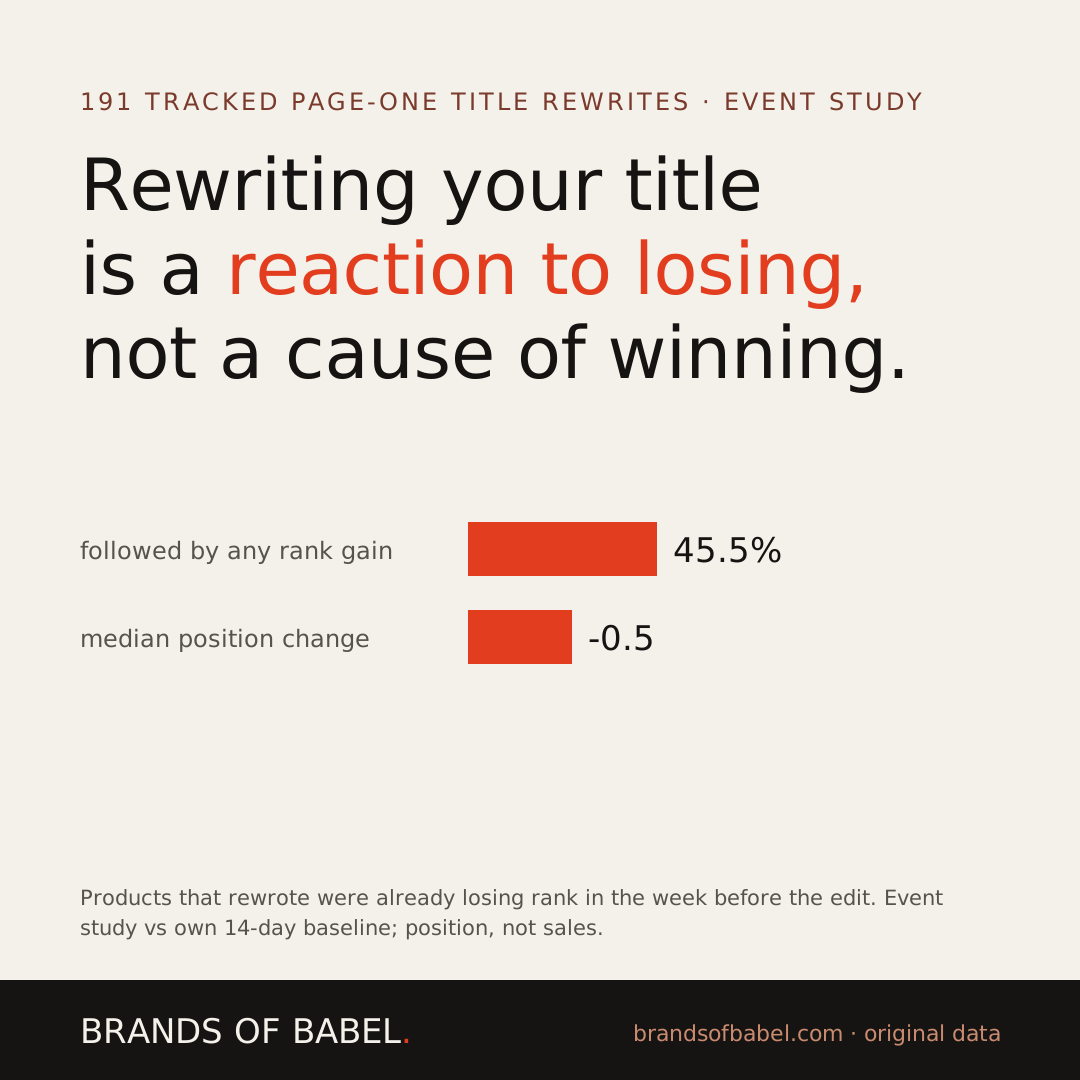
Across 191 tracked rewrites: the median was followed by a half-position decline, only 45.5% improved, and the editors were already sliding before they edited (pre-trend +0.58 positions in the prior week). A title rewrite is a reaction to losing, not a cause of winning. Edit for indexing, click-through, and compliance. Not rank.
The cap change is erasing variant differences
On 27 July 2026 Amazon cut titles to 75 characters. We observed 6,359 ASINs on both sides of that date: 1,565 changed their titles, and 172 were cut from over 75 characters to 75 or under. In five of those cases the cut collapsed distinct products onto identical strings.
Cellucor Creatine Powder is the clearest example. Three ASINs carried three different titles, one each for Watermelon, Blue Raspberry and Jolly Rancher Green Apple. All three now read "Cellucor Creatine Powder, 5g Creatine per Serving, 50 Servings". Twelve ASINs in total now carry a title identical to a sibling that previously had its own. Where flavor, size or count was the thing that told two products apart, the title is no longer carrying it.
How long should an Amazon title be?
As long as your category's winners make it. Electronics and supplements: 160-190 characters. Apparel, toothpaste, and snacks: closer to 110. A universal ideal does not exist in our data; the poles do.
Do numbers in titles help?
~95% of page-one titles contain one. Necessary wallpaper, not an edge.
Does rewriting a title improve rank?
In 191 tracked rewrites, the median outcome was a slight decline and editors were typically already sliding. Rewrite for indexing, CTR, and compliance, not rank.
Should my title start with my brand?
About three in four page-one titles do, and it sorts nobody. Supplements are the extreme at 97-99%. On idea-led shelves like skincare, snacks, and toys, roughly half lead with the benefit or format instead.
What words should I use?
Your shelf's mandatory vocabulary first (the words in 40%+ of your category's titles; four categories have none), your differentiators second. No individual word predicts winning.
Every headline finding ships as a share-ready card. Take them; the source line comes with.
Corpus, two tiers, counted in unique titles throughout. Core: ~10,900 deduplicated (ASIN, normalized-title) pairs from continuous daily-cadence tracking of six head keywords and their shelves (protein powder x2, creatine, whey protein, toothpaste, peptide and vitamin C serum), October 2025 to July 2026. Deduplication is the honest unit here: daily tracking observes the same title hundreds of times, so counting observations would inflate the corpus without adding a single new title, and high-frequency products would dominate every word-level result. Cross-section: ~15,000 additional deduplicated page-one titles captured in July 2026 across home and kitchen, electronics, apparel, pet and baby, toys, beauty tools, snacks, commodity paper goods, fitness and auto, and pre-workout head keywords, grouped into clusters by keyword pattern (coarse by design). All dynamics findings (churn, rewrites) come from the core tier only; the cross-section supports composition claims at a moment in time, not monitored shelves.
Tokenization: lowercased, split on non-alphanumerics; tokens under three characters, pure numbers, and a 30-word grammatical stoplist removed. Homogeneity: average pairwise Jaccard similarity of title token sets, 60-title deterministic samples per shelf (1,770 pairs each). Rewrite events: normalized title transitions per (keyword, ASIN); aftermath = average organic position 14 days after vs before; at least 3 observations each side; N=191.
Honesty constraints: everything here is correlational or event-study against the product's own baseline. Page-one survivorship applies. Findings 1 to 12 were collected under the 200-character title policy in force before July 27, 2026, and every length finding among them describes that world. Finding 13 is the exception and is deliberately scoped to the change itself: it compares the last title each ASIN carried between 20 and 26 July against the last one observed from 30 July to 4 August, counting only ASINs seen on both sides. Eight days is a leading indicator, not a settled rate, and the rollout runs through late 2026. Across the whole corpus we can observe that a title changed but never who changed it. Brand-first figures may be modestly inflated by brand-field derivation; the cross-category contrast is robust. Brand tokens appear in vocabulary lists because winners' brands are part of a shelf's language. Some title changes may originate from Amazon's catalog systems. Position is the observable, not sales. No performance promises.